Monkey Hepatic Stellate Cells

Reference: P10643

645,00

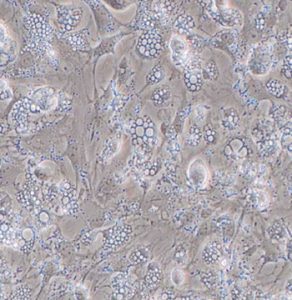
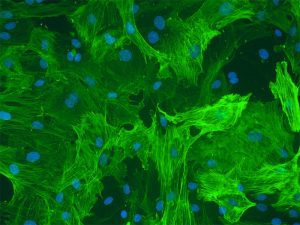
Monkey Hepatic Stellate Cells (MoHSteC) provided by Innoprot are isolated from Cynomolgus monkey liver tissue. MoHSteC are cryopreserved immedaitelly after isolation and delivered frozen. Each vial of Monkey Hepatic Stellate Cells contains more than 500.000 viable cells. MoHSteC are guaranteed to further expand for 15 population doublings in the provided conditions in the technical sheet.

Innoprot also offers optimized medium and reagents for the growth of Monkey Hepatic Stellate Cells which are quality tested together and guaranteed to give maximum performance as a global solution for in vitro MoHSteC culture.


Size/Quantity: 500.000 Cells / vial

Monkey Hepatic Stellate Cells (MoHSteC) are intralobular connective tissue cells presenting myofibroblast-like or lipocyte phenotypes. They participate in the homeostasis of liver extracellular matrix, repair, regeneration, fibrosis and they regulate retinol metabolism, storage and release. Following liver injury, MoHSteC transform into myofibroblast-like cells; furthermore they are the major source of type I collagen in the fibrotic liver. Beyond these features, MoHSteC act as regulators of hepatic microcirculation via cell contraction, moreover in disease states, in the pathogenesis of intrahepatic portal hypertension. MoHSteC proliferation, migration, and chemokine expression play key roles in liver inflammation and fibrogenesis. New insight into the molecular regulation of Monkey Hepatic Stellate Cells activation will lead to therapeutic approaches in treatment of hepatic fibrosis. HSteC could lead to reduced morbidity and mortality in patients with chronic liver injury.
  • Reference: P10643
  • Size/Quantity: 5x10⁵ cells / vial
  • Product Use: For research use only
  • Shipping Conditions: Dry Ice

Related products

Innoprot
Resumen de privacidad

Esta web utiliza cookies para que podamos ofrecerte la mejor experiencia de usuario posible. La información de las cookies se almacena en tu navegador y realiza funciones tales como reconocerte cuando vuelves a nuestra web o ayudar a nuestro equipo a comprender qué secciones de la web encuentras más interesantes y útiles.