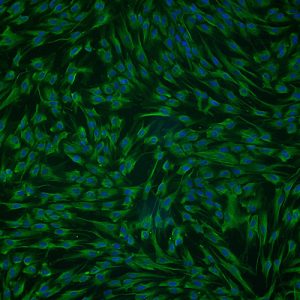
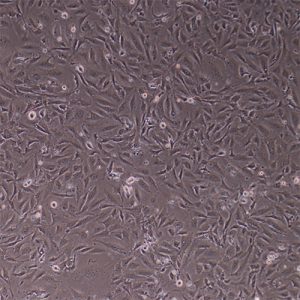
Immortalized Human Retinal Pericytes (IM-HRP) provided by Innoprot have been developed by immortalizing primary human retinal pericytes with SV40 Large T antigen.
Immortalized cells were controlled passaging side by side with the primary cells. Primary cells go into senescence after the 4th passage while the SV40‐tranduced cells go beyond 30 passages.
Each vial of Immortalized Human Retinal Pericytes contains more than 1 million viable cells. Innoprot also offers optimized medium and reagents for the growth of IM-HRP which are quality tested together and guaranteed to give maximum performance as a global solution for in vitro IM-HRP culture.
Size/Quantity: 1 million Cells / vial
Pericytes are contractile smooth muscle-like cells that cover the abluminal surface of microvessels. They are most abundant on venules and are common on capillaries. The pericyte population is highly variable between different tissues and organs and appears to show functional heterogeneity. Human brain vascular pericytes play a crucial role in the formation and functionality of the blood-brain barrier; but also in the regulation of angiogenesis, survival of endothelial cells, and clearance and phagocytosis of cellular debris. Due to the close relationship with endothelial cell structure and blood flow, an excess or deficiency in vascular pericyte activity is related with in various pathological conditions including hypertension, diabetic retinopathy, Alzheimer’s disease, multiple sclerosis, and central nervous system tumor formation. Human retinal pericytes will surely continue to provide an in vitro model in the pathophysiological studies of eye vascular diseases.


 See more details on Bioz