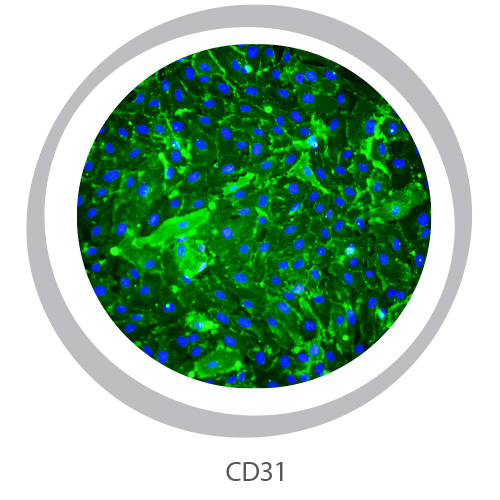
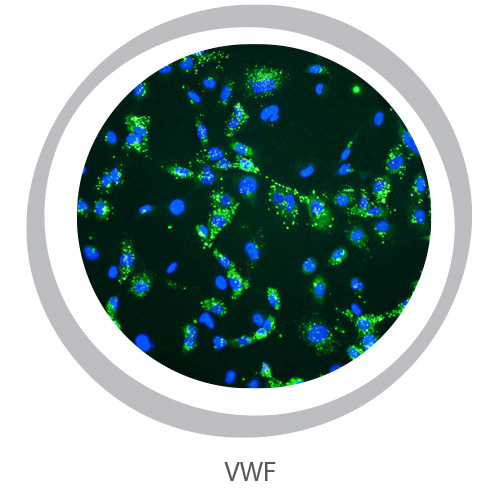
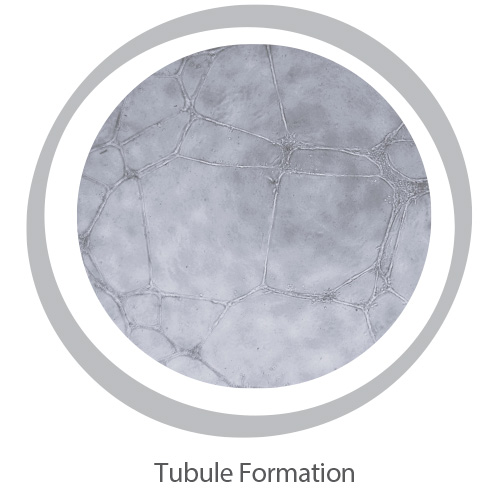
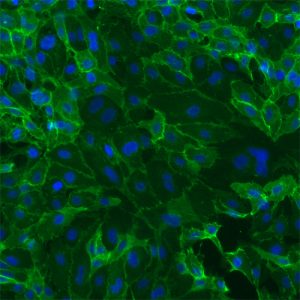
Immortalized Human Cardiac Microvascular Endothelial Cells (IM-HCMEC) provided by Innoprot have been developed by immortalizing primary human cardiac microvascular endothelial cells with SV40 Large T antigen.
Immortalized cells were controlled passaging side by side with the primary cells. Primary cells go into senescence after the 5th passage while the SV40‐tranduced cells go beyond 30 passages.
Each vial of IM-HCMEC contains more than 1 million viable cells. Innoprot also offers optimized medium and reagents for the growth of IM-HCMEC which are quality tested together and guaranteed to give maximum performance as a global solution for in vitro IM-HCMEC culture.
Size/Quantity: 1 million cells / vial
Human Cardiac Microvascular Endothelial Cells (CMEC) play important roles in myocardial function. They regulate vascular tone by releasing and degrading endothelium-derived vasoactive factors, and modulating the local levels of vasoconstrictors and vasodilators through their enzymatic activities. Many of these substances can also modify myocardial contractile behavior. Furthermore, microvasculature participates in the regulation of leukocyte recruitment, inflammation, and angiogenesis. They are also capable of trans-differentiating into myofibroblasts, suggesting a role in aberrant accumulation of matrix and fibrotic disorders. Human Cardiac Endothelial Cells provide an invaluable tool for understanding CMEC physiological and pathophysiological relevance in cardiac function and disease. Immortalized Human Cardiac Microvascular Endothelial Cells also allow to stablish in vitro models for High Throughput and High Content Screening.



 See more details on Bioz