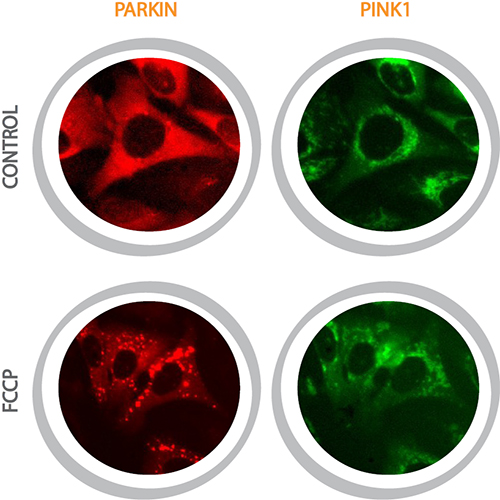
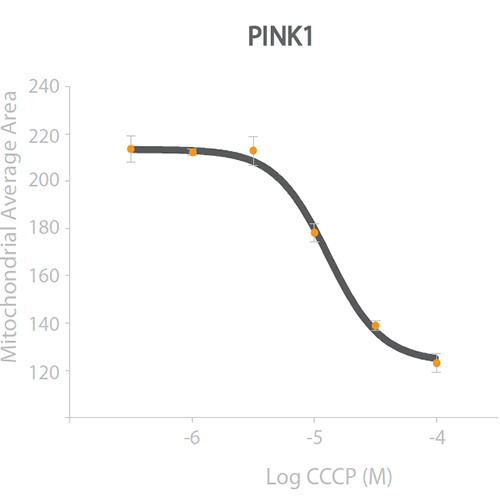
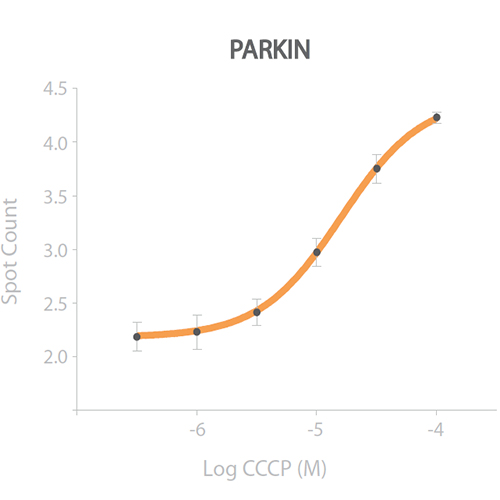
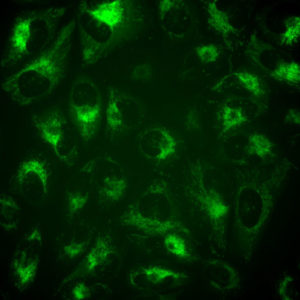
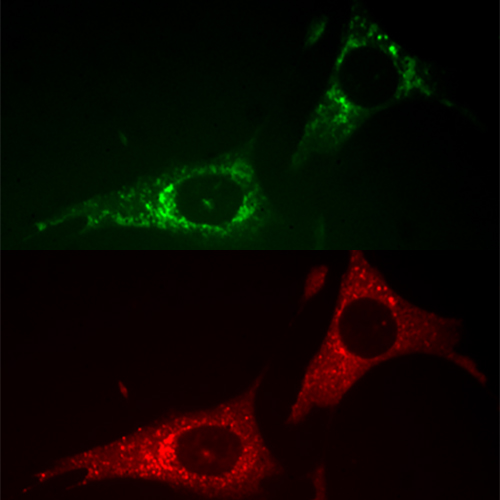
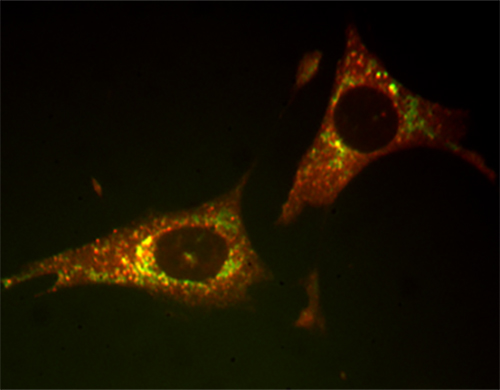
Our PARKIN-PINK1 Cell Line is a U2OS stably engineered cell line co-expressing human PINK1 fused to green fluorescent protein (GFP) and human Parkin fused to red fluorescent protein (RFP). This dual-fluorescent system provides a powerful platform for studying mitophagy under physiological and stress-induced conditions.
Under mitochondrial stress, PINK1 accumulates on the outer mitochondrial membrane and recruits Parkin, triggering mitophagy. By tagging PINK1 with green fluorescent protein (GFP) and Parkin with red fluorescent protein (RFP), this cell line allows researchers to monitor their localization, interaction, and translocation with high spatial and temporal resolution.
Each vial of this cell line contains 3 million cells. It is guaranteed that these cells will expand in more than 30 passages following the cell culture manual.
Parkin and Pink are key proteins in the regulation of mitophagy, a crucial process for the removal of damaged mitochondria and the maintenance of cellular homeostasis. Parkin is an E3 ubiquitin ligase that translocates to the outer mitochondrial membrane in response to mitochondrial depolarization, mediating ubiquitin tagging for subsequent degradation. Pink, a serine/threonine kinase localized to mitochondria, acts as a sensor of mitochondrial damage and is essential for Parkin activation. Together, these proteins initiate the selective autophagic clearance of damaged mitochondria. This PARKIN-PINK1 Cell Line enables direct visualization of PINK1 stabilization and Parkin translocation during mitophagy in live cells.

 See more details on Bioz