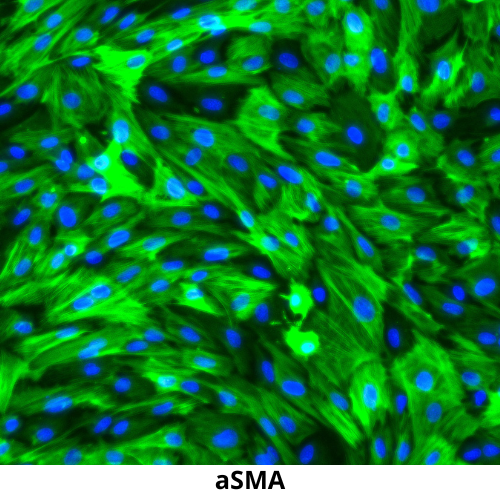
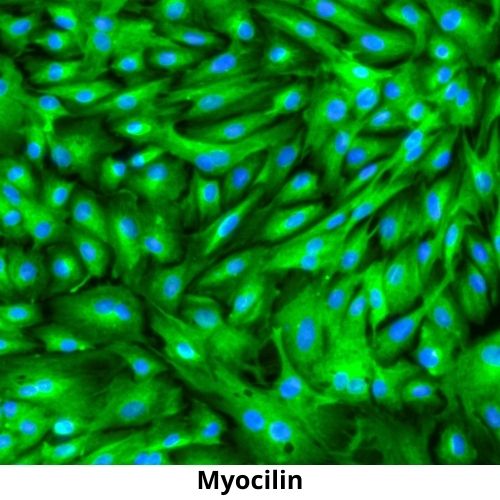
Porcine Trabecular Meshwork Cells (PTMC) provided by Innoprot are isolated from porcine trabecular meshwork explants. PTMC are cryopreserved at passage one and delivered frozen. Each vial of Porcine Trabecular Meshwork Cells contains more than 500.000 viable cells. They are guaranteed to further expand for 10 population doublings following the instructions provided in the technical sheet.
Innoprot also offers optimized medium and reagents for the growth of Porcine Trabecular Meshwork Cells which are quality tested together and guaranteed to give maximum performance as a global solution for in vitro PTMC culture.
Size/Quantity: 500.000 cells / vial
Trabecular meshwork is present around the circumference of the root of the iris and has a slit opening into the Schlemm’s canal that drains aqueous to venous vessels. Porcine Trabecular Meshwork Cells (PTMC) play an active role in the aqueous humor outflow and this pathway is intraocular pressure-dependent. Injury or death of TMC, therefore, is related with the pathogenesis of open-angle glaucoma. Primary porcine trabecular meshwork cells retain characteristic morphological, molecular, and functional features, including responsiveness to glucocorticoids and expression of trabecular meshwork–associated markers such as myocilin. Their physiological relevance and close similarity to human trabecular meshwork biology make them a valuable in vitro model for studies of aqueous humor dynamics, glaucoma pathophysiology, and pharmacological screening targeting intraocular pressure regulation. They are also very useful cells to stablish disease models for High Throughput and Hight Content Screening.


 See more details on Bioz