2.650,00€–3.500,00€Price range: 2.650,00€ through 3.500,00€
Here we show a novel collection of stable cell lines overexpressing APOE4. These models provide a powerful tool for studying the molecular and cellular mechanisms underlying neurodegenerative diseases, including Alzheimer’s disease.
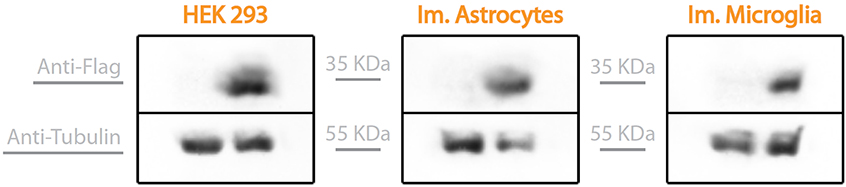
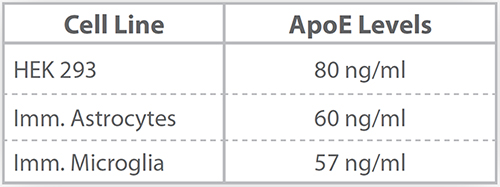
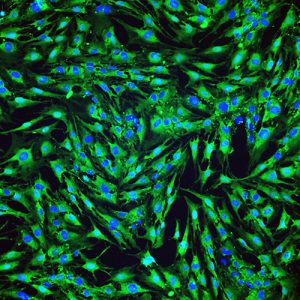
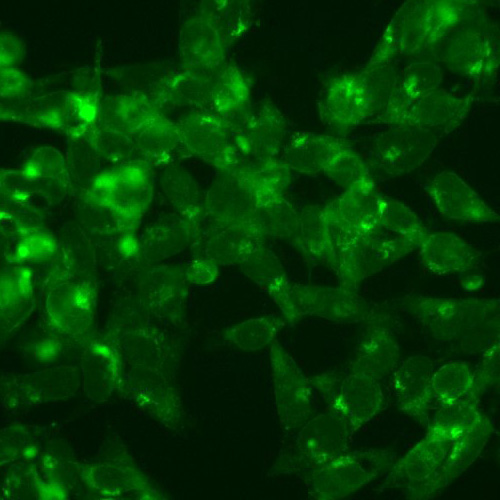
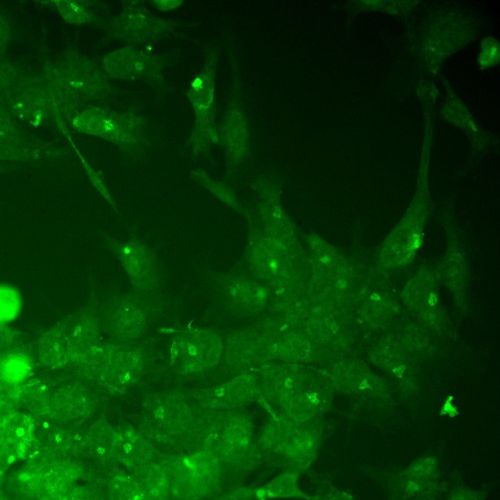
HEK293, Immortalized Microglia, and Immortalized Astrocytes overexpressing ApoE4-FLAG are stably engineered to overexpress the ApoE4 isoform tagged with a C-terminal FLAG epitope, enabling easy detection and purification. Protein overexpression has been validated by both immunofluorescence and Western blot. Additionally, active secretion of ApoE4 into the culture medium has been confirmedvia ELISA, ensuring functional expression and suitability for studies on lipid metabolism, neuroinflammation, and neurodegenerative disease mechanisms. Developed with precision and reproducibility in mind, our APOE4-expressing cell lines are optimized for a wide range of applications, from in vitro disease modeling to high-throughput screening.
Apolipoprotein E (APOE) is a lipid-transport protein that plays a key role in cholesterol metabolism and neuronal repair. It exists in three isoforms: APOE2, APOE3, and APOE4. These are encoded by the ε2, ε3, and ε4 alleles of the APOE gene on chromosome 19. Among them, APOE4 shows the strongest association with late-onset Alzheimer’s disease. People with one or two ε4 alleles have a higher risk of developing Alzheimer’s and often show symptoms earlier. A single amino acid change (Arg112 instead of Cys112) gives APOE4 different structural and functional properties. This isoform affects several processes involved in neurodegeneration. It reduces clearance of amyloid-beta, increases tau phosphorylation, and promotes inflammation. APOE4 also disrupts mitochondrial function and leads to synaptic loss. APOE4 Expressing Cell Lines support drug screening and help clarify how this isoform contributes to disease.
Researchers also link APOE4 to other brain-related and metabolic disorders, such as cerebral amyloid angiopathy and poor recovery after brain injury. Because of its broad impact, APOE4 remains a major target in neuroscience research. APOE4 expressing cell lines allow scientists to explore its specific effects.


 See more details on Bioz