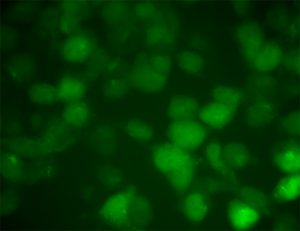
Alpha-synuclein is a protein that, in humans, is encoded by the SNCA gene. Alpha-synuclein is a neuronal protein that regulates synaptic vesicle trafficking and subsequent neurotransmitter release. It is abundant in the brain, while smaller amounts are found in the heart, muscle and other tissues. In the brain, alpha-synuclein is found mainly in the axon terminals of presynaptic neurons. Within these terminals, alpha-synuclein interacts with phospholipids and proteins. Presynaptic terminals release chemical messengers, called neurotransmitters, from compartments known as synaptic vesicles. The release of neurotransmitters relays signals between neurons and is critical for normal brain function.
In Parkinson’s disease and other synucleinopathies, insoluble forms of alpha-synuclein accumulate as inclusions in Lewy bodies. Familial Parkinson’s disease is associated with mutations in the alpha-synuclein (SNCA) gene. In the process of seeded nucleation, alpha-synuclein acquires a cross-sheet structure similar to other amyloids. The human alpha-synuclein protein is made of 140 amino acids. An alpha-synuclein fragment, known as the non-amyloid beta component (NAC) of Alzheimer’s disease amyloid, originally found in an amyloid- enriched fraction, was shown to be a fragment of its precursor protein, NACP. It was later determined that NACP was the human homologue of Torpedo synuclein. Therefore, NACP is now referred to as human alpha- synuclein.



 See more details on Bioz